- Talking Africa-Europe -A Leadership Series
- #RoadtoLuanda25
Luanda's Legacy: How Africa and Europe are Holding the Middle Ground in a Multipolar World

This edition of the Talking Africa-Europe Leadership Series features Dr. Fatima Denton, who joins AEF Senior Fellows Camilla Toulmin (Sustainable Energy) and Sylvain Boko (Sustainable Finance) to pivot the discussion from the rhetoric of the 7th AU-EU Summit in Luanda, Angola, to the strategic, actionable work of implementation.
Following the successful 7th Summit of African and European Heads of State held in Luanda this past November, both continents firmly solidified their commitment to acting as crucial allies. Their shared goal is to hold the middle ground and reinforce multilateral structures amid significant global disruption.
Against this backdrop of renewed partnership, we'd like to start by hearing how your career began in climate, justice, and sustainability.
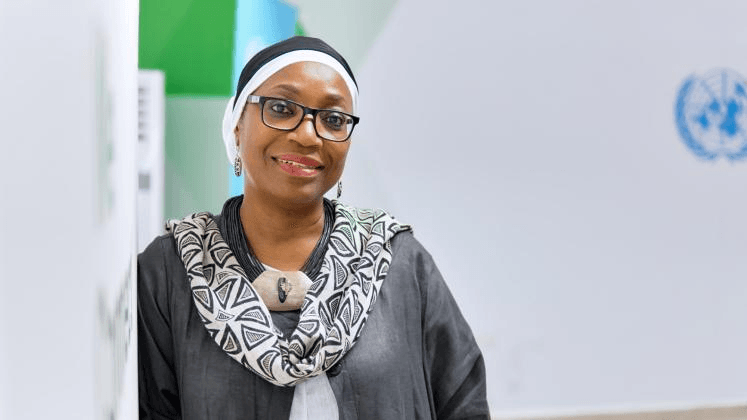
Dr Fatima Denton, Director of the United Nations University Institute for Natural Resources in Africa (UNU-INRA)
My experience and opportunities have been partly by design and partly by chance. I have a very eclectic background, principally from the humanities, having studied Latin and French literature. I went on to study political science, which led me into climate change at a time when there were few Africans in this space. It's a joy today to see how many people from the global South and from Africa are now present at COP, coming on board, becoming champions, experts and scholars, all speaking up. When I started 25 years ago, there were not many faces like mine. Today, we have a greater understanding of climate change, gender, poverty, and vulnerability than when I began.!
Career-wise, I joined an agency (APSO) that sends Irish nationals to different parts of the world. It was a very competitive process. I remember they asked me two questions – first, 'Are you Irish?' and second, 'Do you have two years?' I couldn't say yes to either. We also faced many questions, such as what you would do in an African village during a power cut, to test the candidates' survival skills and ability to think on their feet. I was brought up in the Gambia, but I was a bit of a townie, so I could not relate much to life in a rural setting. Luckily, they accepted me and I was sent off to Senegal, where I had studied earlier.
The work was with ENDA-Tiers Monde, which had a well-established energy programme. I was not an energy scholar to start with, but my time at the Sorbonne was useful. I could take any text and delve into it deeply, analytically. We needed to develop a narrative for Africa to exit the poverty trap, given the vast range of energy resources available. I was fortunate to have excellent mentors such as Youba Sokona.
The skills of a political scientist are needed everywhere. During my time at ENDA-TM, everyone was then talking about the Clean Development Mechanism, whether this could provide a sustainable dividend for Africa, and how Article 50 might fit within the overall convention. I was lucky to have landed at ENDA TM, where I learned a lot about mitigation aspects and energy access. But as an African, your daily engagement also helps you think a lot about climate adaptation. What you see across the streets and landscape has a bearing on adaptation; everywhere, people are coping with water or energy shortages. So I understood climate adaptation in both a broad, practical sense and a scholarly perspective.
I was keen to work on aspects of climate resilience, since I was among the first in the field to examine climate change and gender from a social vulnerability perspective. I did a lot of research for Energia, amongst others, and in 2002 published an article about women and climate change, highlighting this as a significant blind spot. This is roughly how I got started in the climate field. I might have gone back to the Gambia and settled into the Foreign Office, but ENDA sent me off on a very different tangent.
What's the role of research in changing policy and practice? How best can you engage with government officials to push them to change how they see the world and the decisions they make?
In all the organisations where I have worked, I have realised how vital knowledge is in winning people over, especially for a topic as complex as climate change and its implications. To challenge the debate around climate change, you must invest in research. Twenty years ago, there was a significant asymmetry in knowledge, with prolific knowledge production by Western scholars but very few Africans involved.
Why does the split between Mitigation and Adaptation dominate the climate field? The climate narrative became anchored in two main concepts, grounded in the power of knowledge generated from different sources. But they should be seen as complementary twin tasks.
In the case of UNECA, African member states respect the organisation for its expertise. While UNECA does very little direct research itself, it commissions, ensures the quality of, and publishes it. Member states know they can get an arsenal of sound information on subjects from reproductive rights to climate change. The statistics are well-founded and credible.
At Canada's IDRC, I led an extensive programme on adaptation research to support African institutions engaged in climate research, which hadn't received that level of support before. In climate change adaptation, unless you organise your evidence and adaptation facts into metrics that make sense to decision-makers, you will not be able to elicit technical and political support. My time at IDRC showed me and those we supported the risks of climate impacts, how you need to plan for adaptation, and how to get government officials on your side.
We often overlook how you turn knowledge into something useful for government and society. It took time for people to take adaptation questions on board. Let's take agricultural extension workers, for example. It became apparent that they need to understand the impacts of climate change to help build more resilient farming systems. Climate scenarios are not representations of some distant future but the conditions we're facing now. There are ways we can manage the risks, but we need the requisite support and ways to combine mitigation with adaptation.
The people around us needed to learn it from the perspective of soil degradation, crop choice and agricultural economics. There are many layers of knowledge and practice; we have to understand them better and their interconnections. We need to think about the language of adaptation and encourage policymakers to consider anticipatory adaptation, given Africa's vulnerability.
“There are ways we can manage the risks, but we need the requisite support and ways to combine mitigation with adaptation. ”
We have also tried to rebalance the climate debate in Africa. We have been heavy on the vulnerability side, but we should exit from this and turn it around. Fifteen years ago, the language of "opportunity" was not common and didn't resonate much, but we wanted to move away from Africa being seen as a victim. Those institutions I was part of helped enable this change in approach. And at UN-INRA, we started talking about "stranded assets" – all the resources we have that could become unsaleable due to climate constraints. The first response was negative – the language didn't work and people didn't understand what we were talking about. Then, suddenly, the COVID pandemic hit, the global economy shut down and assets were stranded.
We saw the consequences of a complete collapse in demand for our resources, which could not be mined and sold. It was an alarming message for governments that African countries lack the ecological capacity to mine their own resources. People didn't want to hear this message. It was too political, but attempting to depoliticise it ignores the reality. Whether you are talking about climate finance, carbon markets, or stranded assets, they are all connected by processes of uneven exchange in terms of value creation and value addition. For me, knowledge is the connective tissue that brings it all together and opens up new ways of looking at problems.
Given UN-INRA's base at the University of Legon, how do you work with the government of Ghana on addressing some of their priorities?
We have several projects where the Government of Ghana is central, such as our programme on understanding "green transitions". We start from the notion that if we are to transition to a low-carbon economy, we need the people most affected by transition dynamics to own the ideas and identify the opportunities. Let's take the huge and vital informal sector in Ghana and, more broadly, across Africa, which tends to get overlooked despite providing the majority of jobs. If enterprises in this sector understand green transitions and the stakes involved, they would be making a significant contribution to ecological and social justice. Examples include expanding the menu of energy options for women and entrepreneurs as they transition into the green economy.
We have focused on women because they are particularly affected by energy poverty; for example, in the agricultural sector, tools remain very rudimentary. So, our project, INFO-CAT, was about ways to incentivise entrepreneurs by saying, "You have ideas and innovation, let's buy into your most creative solutions." And we set up an award scheme for project ideas, testing them for functionality and creativity. We gave people a certain sum for start-up and scaling up to make clever solutions bigger and better.
It started here in Ghana, where we found at least 500 project ideas at the start. The project is still ongoing and has made its mark, though now it's reaching the tail end. It has generated significant media interest in devices tested for the benefit of women in agriculture, as the agri-energy nexus has often been ignored. Another project, JUSTIS, is trying to understand justice as it relates to the informal sector and to ways of reshaping the approach to Just Transition, drawing on its background in the US labour movement while taking an African perspective.
“We should look beyond Western notions of justice and consider concepts rooted in African society, such as "ubuntu," which are absent from discussions of climate justice.”
We have also had projects such as on rice cultivation in Ghana, which is widely consumed here but also generates a lot of methane from rice paddies. If we can cut methane now, it would complement other ways to reduce CO2 emissions.
We have developed innovative work with Ghana's Ministry of Foreign Affairs. Much climate change expertise is concentrated within the Ministry of Environment. Still, because there are multiple climate-related foreign policy questions, we initiated a capacity-building programme, called NATURE-LEAD, to explore them with Ghana's Foreign Office. For example, there are many cross-border implications, such as migration and trade. Ghana has a lot of people crossing its borders from Burkina Faso and Togo, and this is likely to get worse. And we are also setting up a two-way dialogue on policies with substantial overlaps, such as climate and migration, and energy and water.
There are many other problems to face, such as illegal mining (known in Ghana as galamsey) and the massive impacts this has on land degradation, migration, deforestation and climate change. It's beneficial to have broad-based policy discussions on cross-cutting issues with high-level government officials, not just the "usual suspects".
If we are trying to get a better relationship between Europe and Africa, what do you see as the main potential areas and also some of the hurdles? What would you like to see coming out of the 7th Summit at the end of November?
A Summit is always a good strategic venue for discussing collective problems like climate change. In my work with the Earth Commission, co-chaired by Johan Rockström, if we are looking at a pathway for green development, we cannot sweep justice under the carpet, because these issues will come back to bite us.
The justice elements of getting the transition right are also partly to blame for the disruptions in the current Earth systems. If you view justice as a tangible element, you can understand how the lack of justice destabilises the whole system. While the Luanda Summit offers a common space, there are power asymmetries we cannot deny. A collective effort is needed because if all 54 African countries tapped their fossil fuel resources, we would face an even greater climate emergency.
Let me offer a few suggestions. On climate change, invariably, people are well-intentioned and want to find ways to collaborate. But we are already at the 30th COP! Europe has to recognise that African countries are dealing with many systemic structural problems, such as debt, especially in the wake of the COVID pandemic. The cost of borrowing is very high in African countries, and access to capital is complicated.
Our continent accounts for only 4% of global emissions, so if we are to turn our economies around and make them climate-proof, we seek an act of solidarity from other parts of the world, especially those that have been responsible for most emissions. It is essential to understand that Africa is not coming to the table in the same way as others and faces significant challenges.
We are failing to build effective mechanisms for the climate actions we'd like to see. For example, climate finance to Africa is far short of what is required. With estimates of need totalling US$190bn a year by 2030, the finance received is less than a quarter of this. Debt remains a big problem.
“We need to temper our excitement about critical minerals and what they might offer so they do not follow the same path as oil and gas, where others come, extract our resources, and leave.”
The knowledge and revenues end up elsewhere. Africa subsidises the rest of the world. There are high levels of corruption around fossil fuels, with the amount of money leaving the continent far outstripping the amount of climate finance entering it. The system of mechanisms is flawed, they do not enable the necessary actions, new pots of money are not game-changing and MDB reforms are moving too slowly. Take the Loss and Damage fund, which has just $168mn in pledges. This is nothing!
The Carbon Market looked like a "win-win," but its current structure undervalues Africa's resources and, as a result, Africa is losing its forests. The market accreditation process and infrastructure are not in Africa, nor are the measurement and monitoring tools. The carbon registries that the host country needs are not here. If the market is to operate, African countries need to start on a level playing field with the rest of the world.
With the carbon market, the field is not level between buyers and sellers. Rules are needed to determine how countries can participate in the emissions-reduction market, but they are not yet in place. Verification standards are not in place. It's the wild west!
Article 6 of the Paris Climate Agreement provides a cooperative approach, and there have been some improvements from COP29 in Baku to now. Still, significant asymmetries remain around how to share proceeds, the legacies of the Clean Development Mechanism, and the links between voluntary and compliance markets. There are still many concerns regarding quality control, given weak enforcement, numerous loopholes, and the risk of double-counting. The system is not fair; it makes no sense as a way to induce climate action. The African continent is seen as an available sink, but the price is not correct. Problems include the displacement of people and communities being thrown off their land. We need to make sure countries in the Global North don't see offsetting as the way out for addressing emissions, by looking to the Global South to solve their problems.
Things should also be done through the Carbon Border Adjustment Mechanism, since energy-intensive activities, such as the steel industry, are still nascent in Africa. Penalising countries in Africa is not a good way to help them.
“We should be looking at what infrastructure, capacity-building, and investments could bring African countries up to standard so they can compete.”
Europe has a history of overpromising on climate action and underdelivering. The mechanisms around climate finance and action are not working correctly. It is like having a problem with your plumbing; there are leakages, and not enough pressure. Private investors and MDBs should be financing energy investments in the Global South, but the funding is always through blended finance, loans, and credits. With this financial plumbing, the pipes are leaky, and the valves do not work. Fiduciary standards are not fit for purpose, and verification processes are overly burdensome.
It's as though we have a pump without delivering any pressure. Emissions keep rising, but there is a very weak flow of climate funding, and finance alone is no substitute for bold, deep emission cuts. Europe can also play a crucial role in facilitating Africa's access to green capital, including climate bonds, blended finance instruments, and concessional funds that support low-carbon infrastructure and resilience. At the same time, it is imperative to redirect the vast public resources currently spent on fossil fuel subsidies towards social protection systems that safeguard climate-vulnerable communities and promote a just transition.
re has been so much change since President Trump came into office in January. How do you see the disruptions of the last few months?
Can we find hope in some of the changes underway, is disruption useful, or are these dangerous forces?
It's a very disruptive world at the moment, coming from multiple sources - economic, social, and technological. It has forced us to return to basics and emphasize solidarity and the need for transformative change. The US is an essential partner for Africa, but we can also foster closer relations with other partners. We are now looking at rethinking climate leadership. Globally, China is doing more than most countries to address climate change. This should be recognised. When we consider action on climate mitigation, the Climate Agreement has 192 signatory governments in total. Each one of those countries matters. We are truly in a multipolar world.
About Dr Fatima Denton
Dr Denton is the Director of the United Nations University Institute for Natural Resources in Africa (UNU-INRA), based in Ghana. She is an accomplished senior leader in the UN system, with depth of expertise in climate change and natural resource management, as well as in research and policy development, and in the African region. Before joining UNU-INRA, Dr. Denton worked with the United Nations Economic Commission for Africa (UNECA) in Ethiopia as Director of the Natural Resource Management Division and Coordinator of the African Climate Policy Centre. At the Canada-based International Development Research Centre (IDRC), she led the Adaptation to Climate Change in Africa programme.