- Sustainable Finance
- Energy and Climate
- #RoadtoLuanda25
Outcome note: G20 Tax Symposium, Catalysing Capital Flows and Transition Minerals Cooperation and Investment Roundtables
- The Africa-Europe Foundation

The Africa-Europe Foundation (AEF) supported the 7th AU-EU Summit in Luanda, Angola marking 25 years of the AU-EU political partnership.
Key aspects of AEF support centred on: AEF research, including the flagship State of Africa-Europe Report and multi-disciplinary research co produced by leading academic institutes; and AEF convening, including the far-reaching #RoadToLuanda25 Initiative (engaging stakeholders from across both continents to deep dive on topics holding the most promise for a transformative partnership), the pre-Summit Africa-Europe Think-Tank Forum, and the Luanda Strategic Roundtables (focused on practical solutions and pathways to transform Summit commitments into action).
AEF facilitated the high-level G20 Tax Symposium and roundtables on “catalysing capital flows” and “transition minerals and supply chains” - key to driving the Global Green Economy and transforming AU-EU commitments into action. The convenings were framed by AEF’s recently launched State of Africa-Europe Report 2025.
They brought together African and European policymakers and change-makers as well as DFIs, MDBs, sovereign wealth and pension fund representatives, asset managers, legal partners, special economic zone operators, and private sector associations.
Key takeaways and emerging areas for action from the symposium and strategic roundtables:

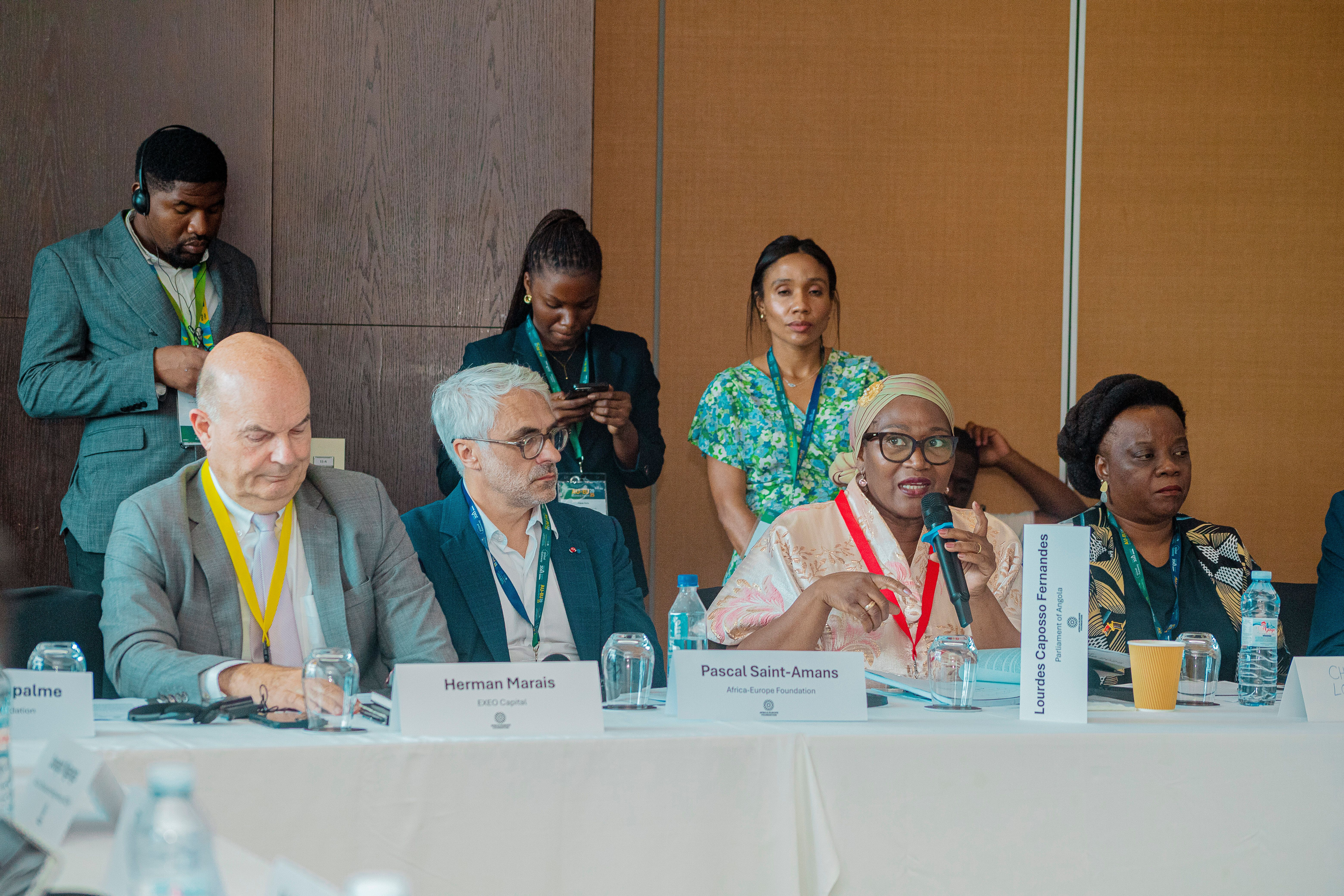
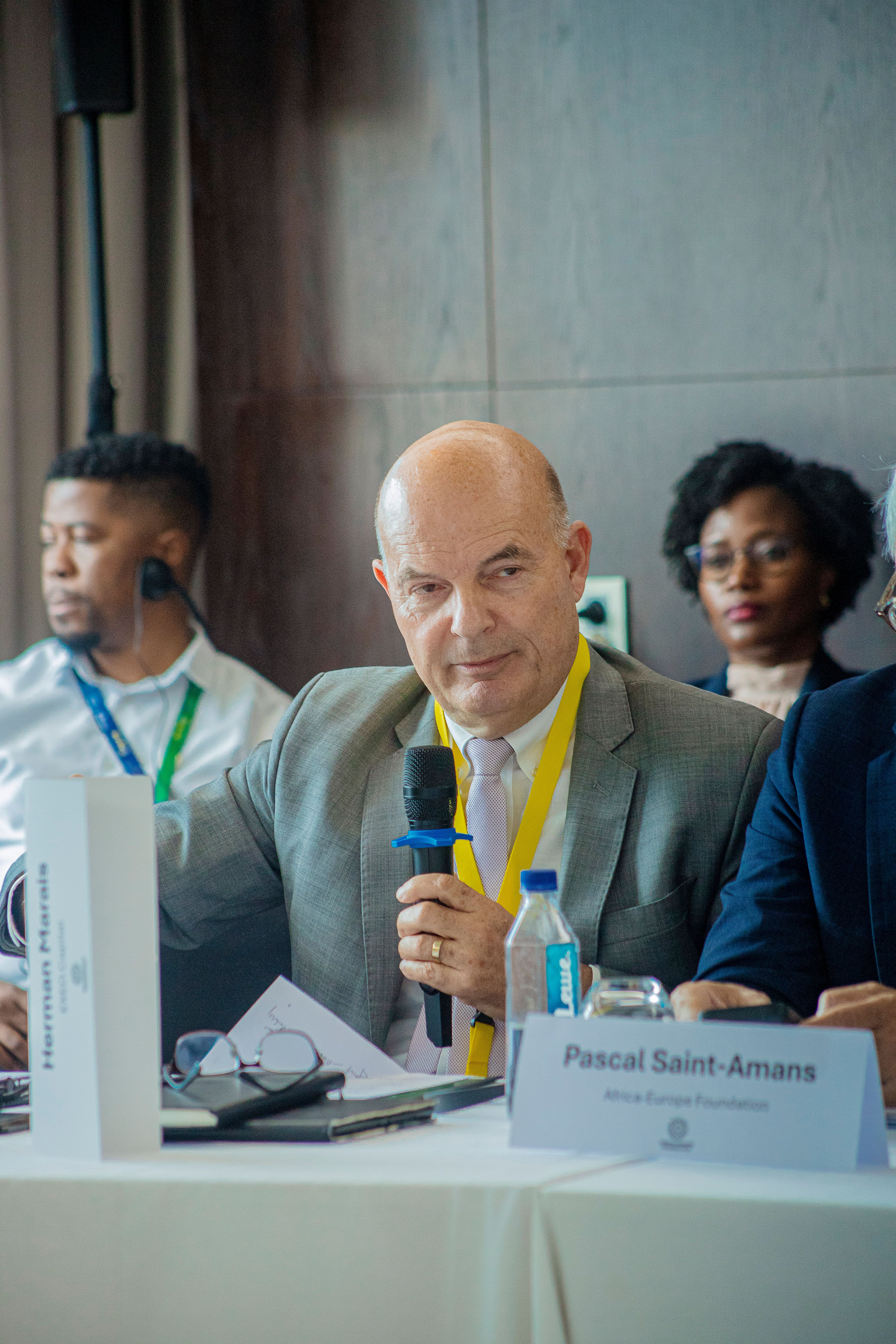
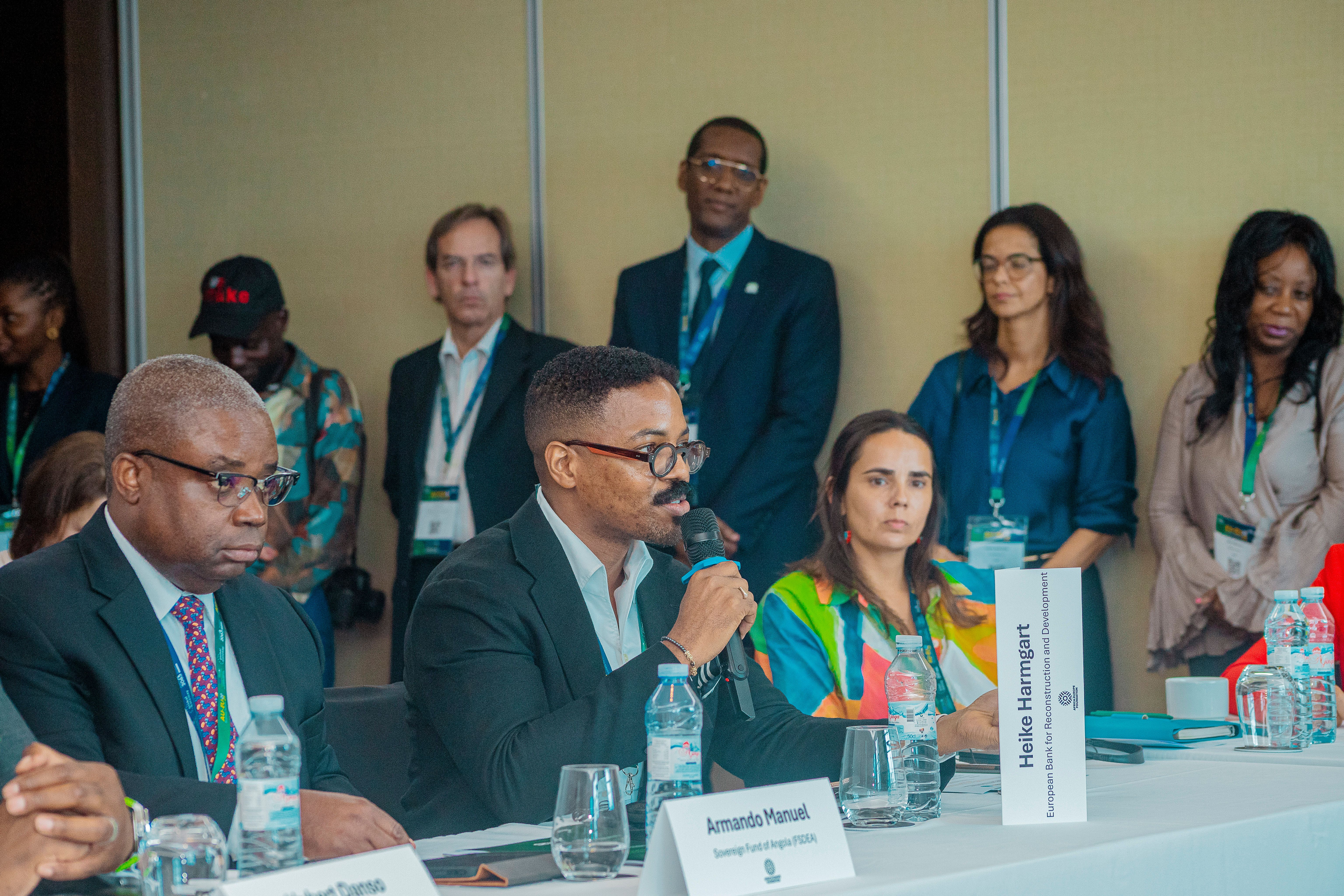
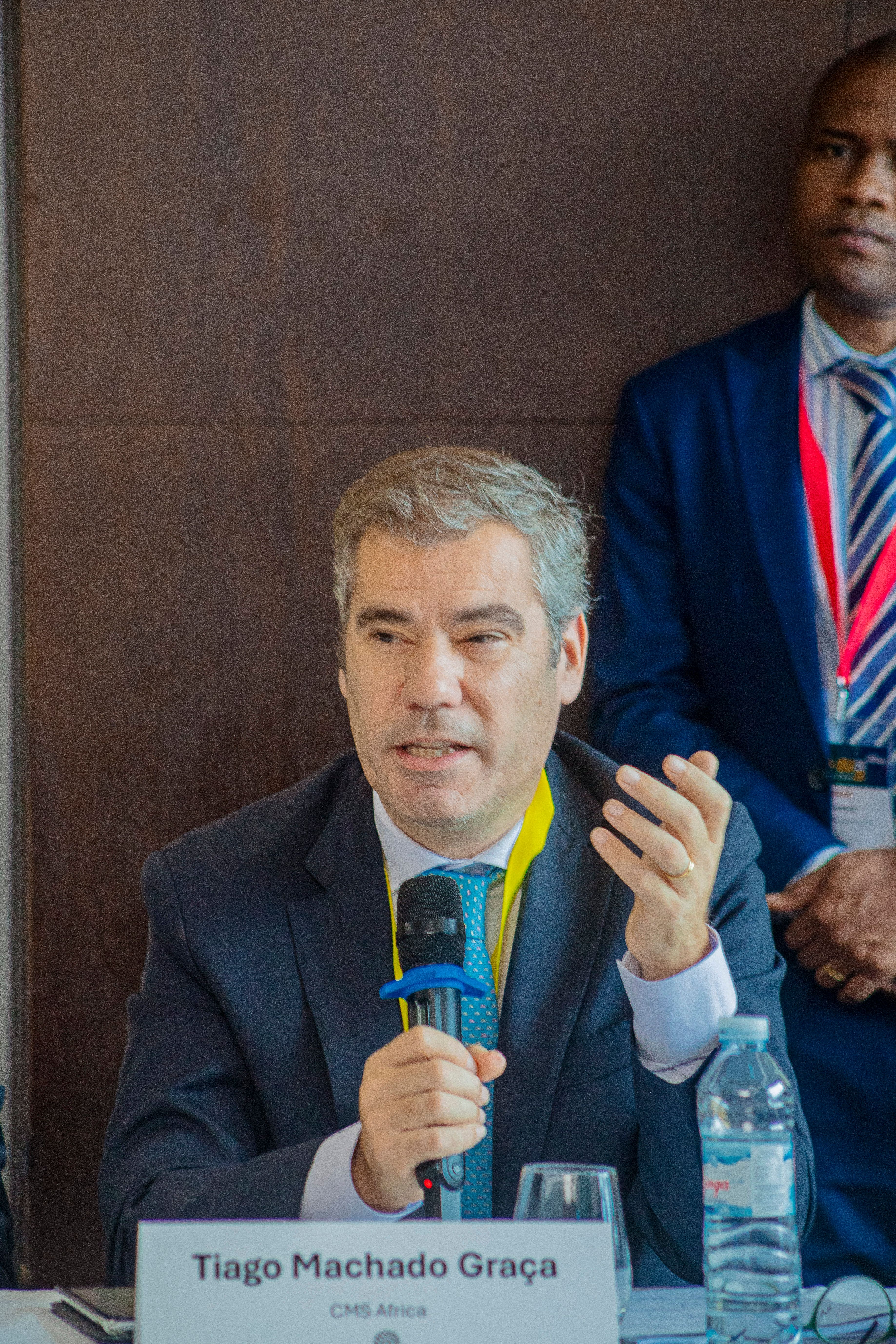
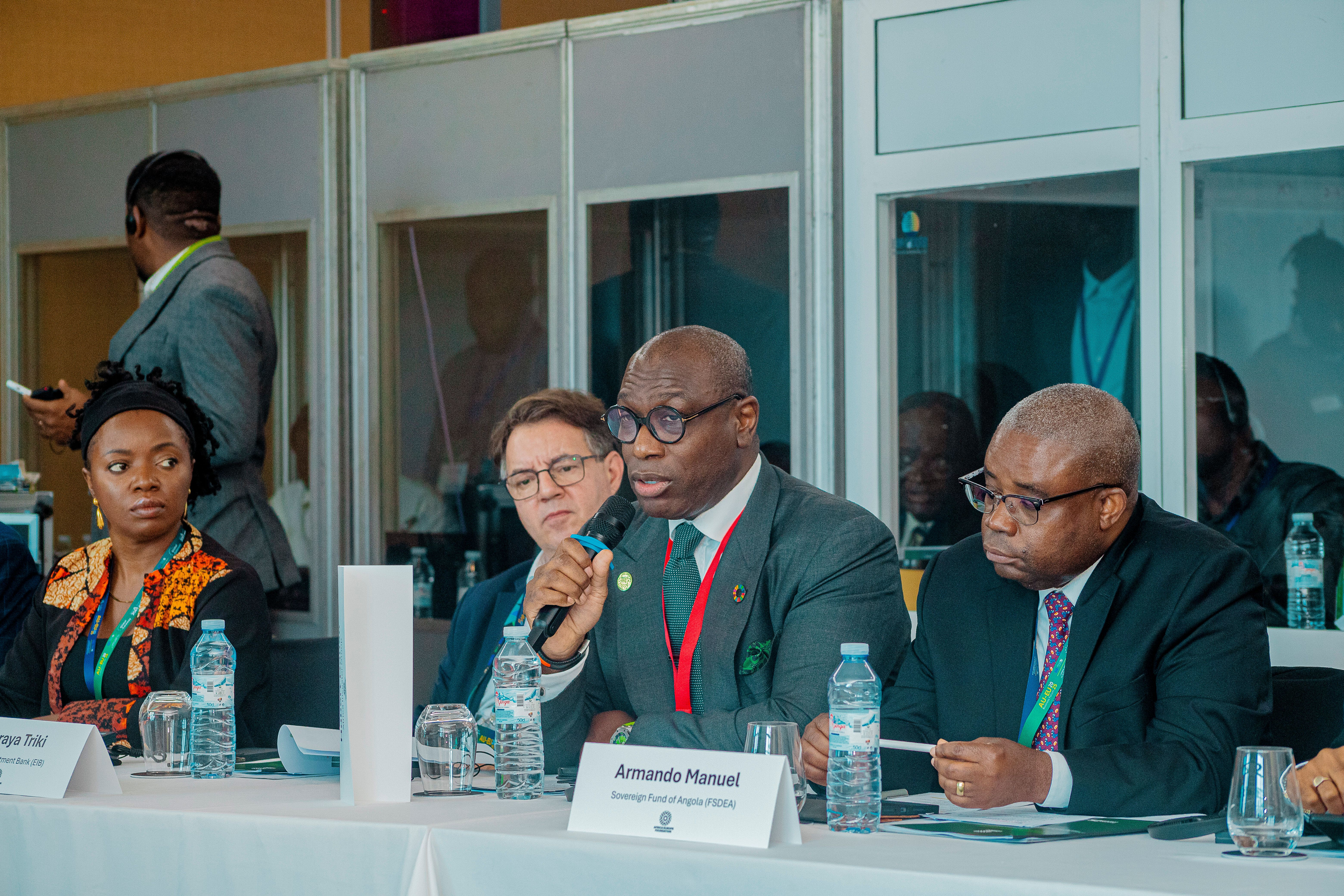
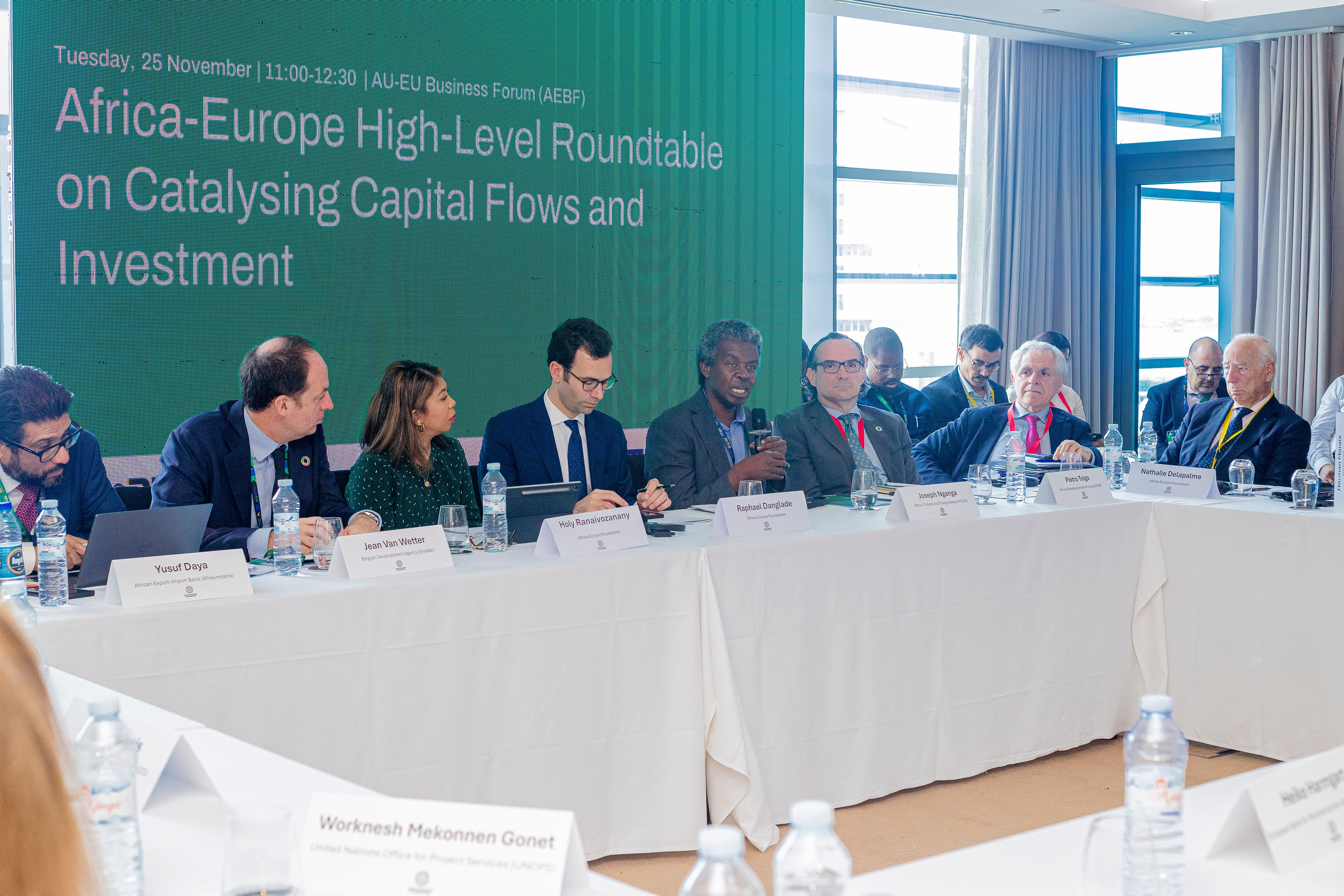
Strategic roundtable on “catalysing capital flows”
-
Capital is not the main issue. Multiple participants emphasised that money is not the principal constraint; investibility and pipeline quality are. Better, unified, and demand-driven project preparation is needed, along with a focus on the persistent barriers of risk perception and the cost of capital.
-
Closing the first-meter financing gap. One proposal: establish dedicated early-stage risk facilities (grants + convertible instruments) for SMEs and small infrastructure projects, with streamlined deployment and local implementing partners.
-
Facilitating Investment Roadshows. Another proposal, to prepare a series of Europe-Africa Investment Roadshows targeting European investors (EU sovereign wealth, pension and insurance allocators…), tied to curated, investment‑grade project lists.
-
Scaling local currency finance and guarantees: expand Infracredit‑style and local currency guarantee facilities to address currency mismatch and attract longer‑term local investor participation.
-
Simplifying and activating blending tools. Reforming administrative processes (EFSD/guarantee schemes) to allow private banks and asset managers to access guarantees with faster turnarounds and reduced bureaucracy.
-
Focusing on improving legal, tax and FX certainty. This is about accelerating signing/adoption of investment treaties, doubling tax agreements, and ensuring mechanisms for predictable FX repatriation; promoting tax certainty regimes for major corridors and zones.
-
Piloting integrated “stitching” platforms. Funding AI‑enabled platforms that assemble market data, technical co‑pilots, ESG diligence, investor matching and blended financing templates to reduce pre‑feasibility timelines from months to weeks for prioritized projects.
-
Launching a shared risk‑data platform. Grant institutional investors controlled access to MDB/DFI loan performance and sovereign/sub‑sovereign datasets to reduce mispricing and lower cost of capital (G20‑mandated dataset activation).
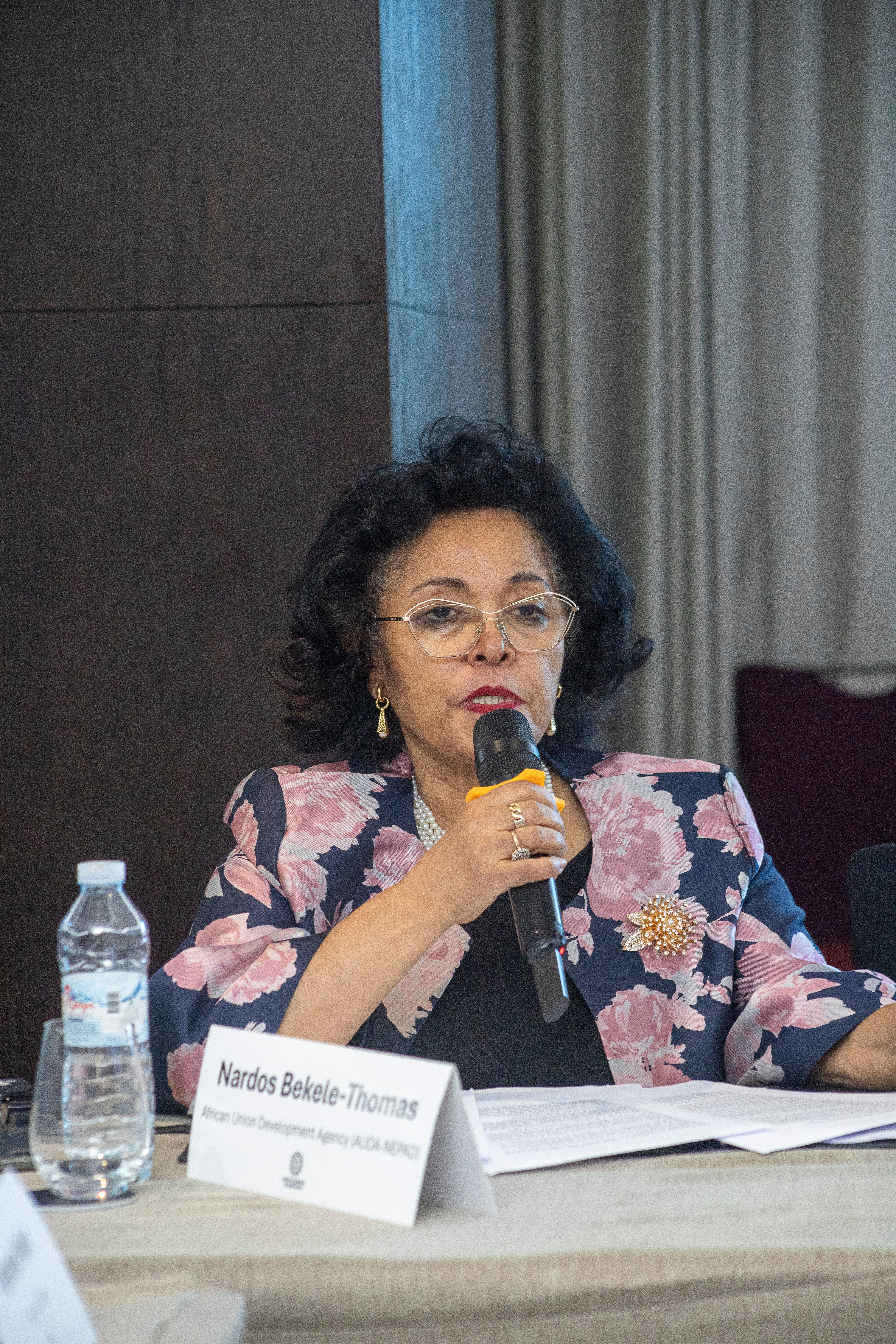

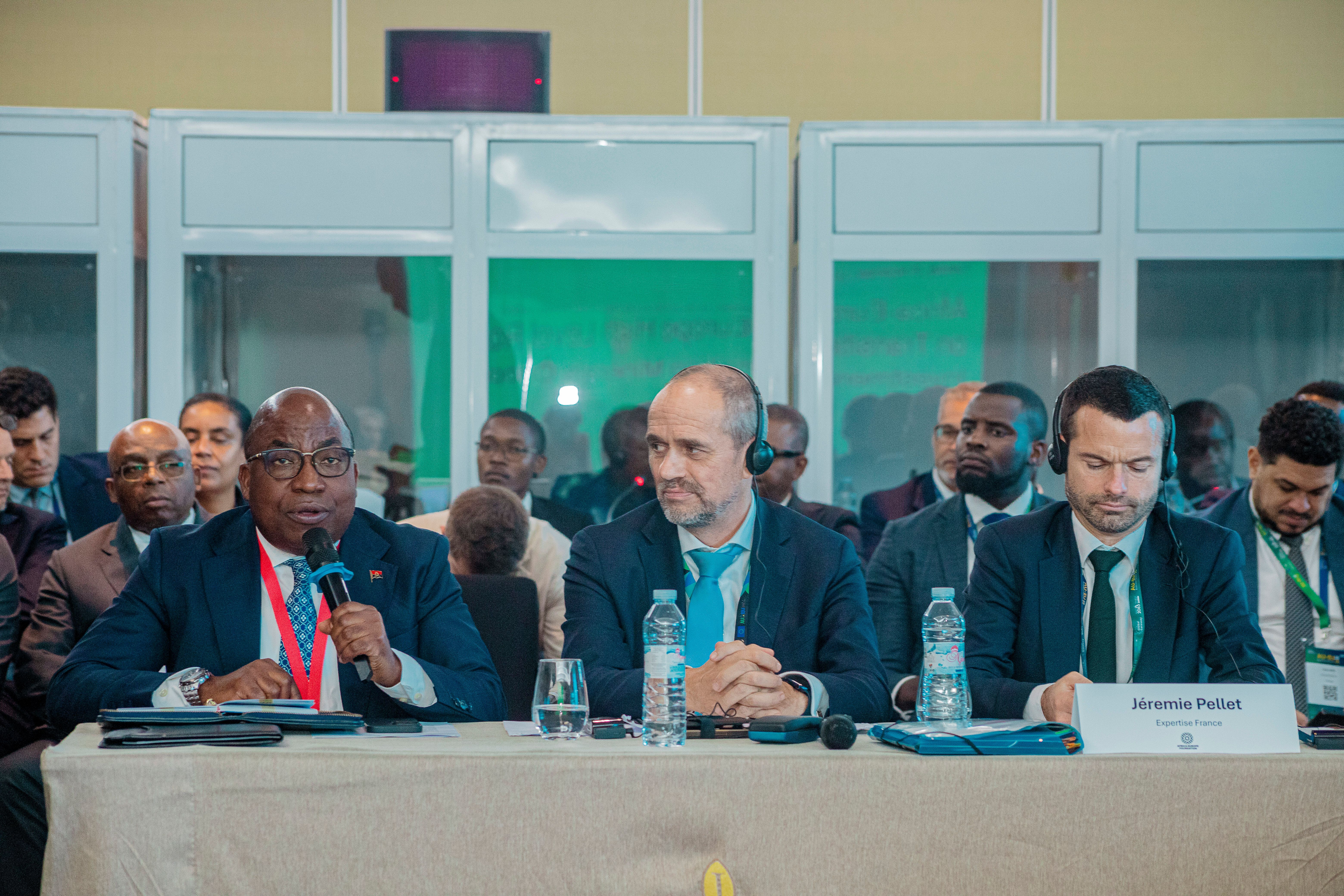
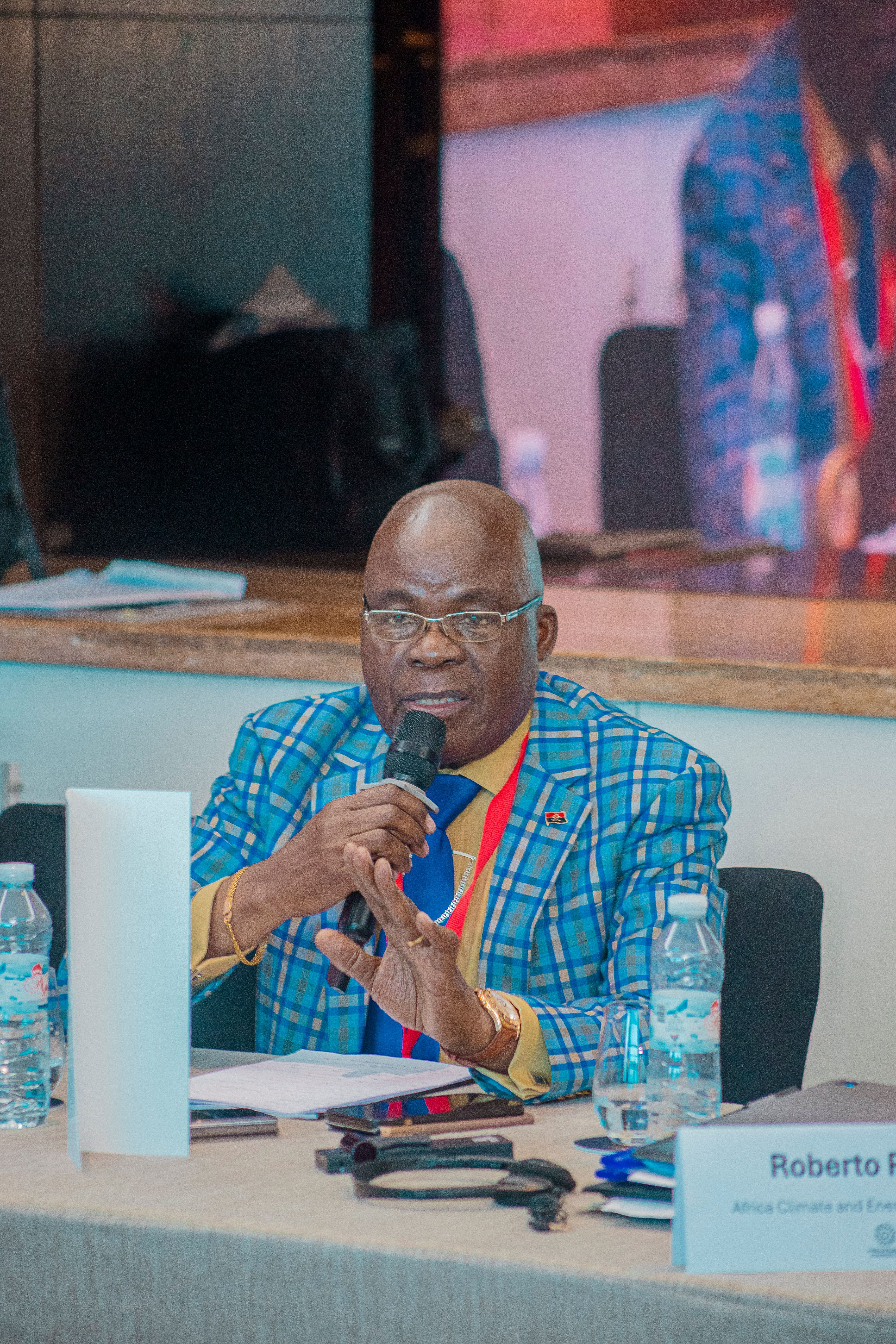


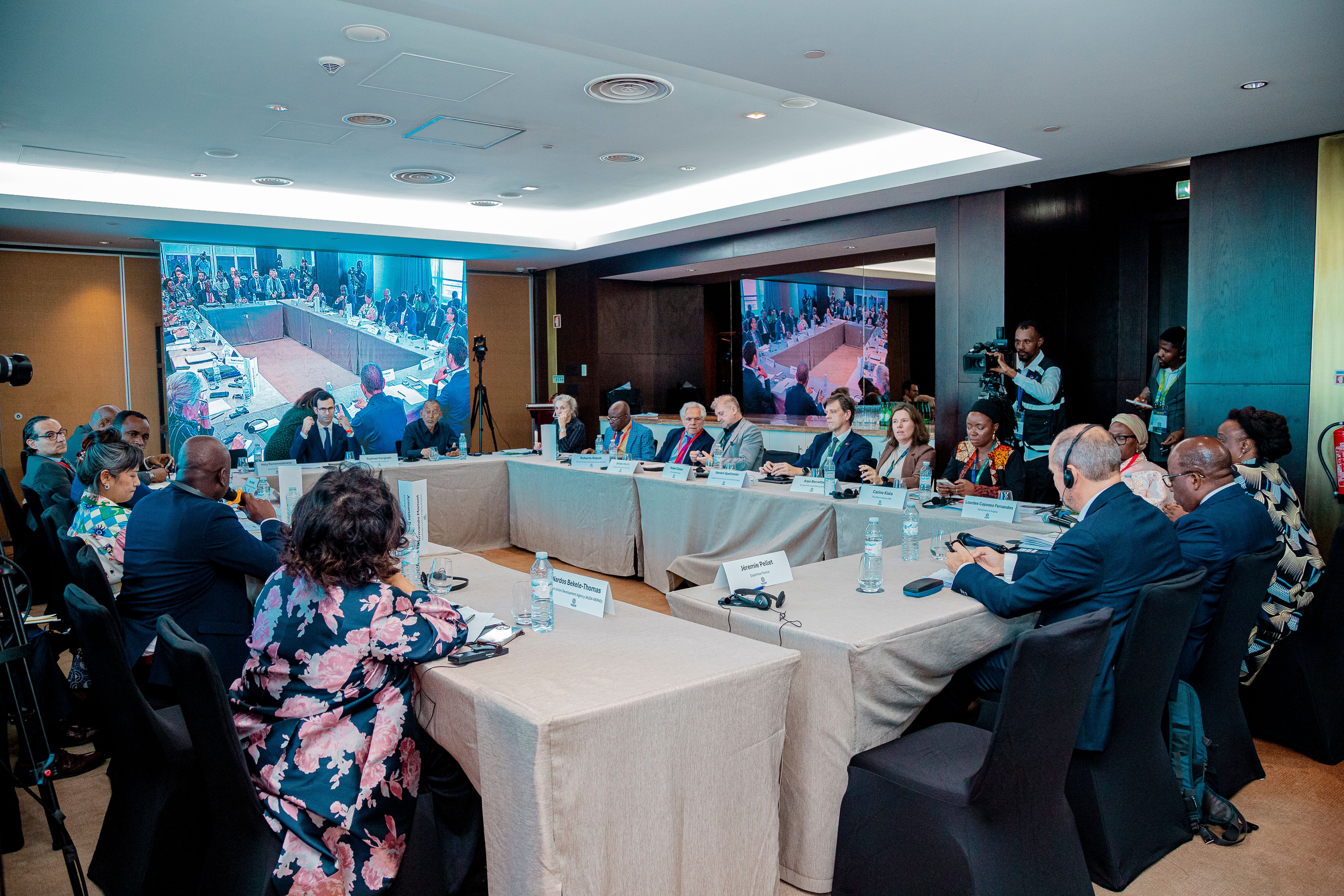
Strategic roundtable on “transition minerals and supply chains”
-
Strategic framing. This area of cooperation helps underpin the paradigm shift and new financial compact advocated in the State of Africa-Europe Report 2025, moving decisively from competitive beyond aid and charity towards co-creation, risk-sharing, value-building, and trading resources. What was described also at the roundtable as “competitive interdependence”.
-
Reducing fragmentation. One proposal is to create a Joint Africa–Europe Mineral Value Chain Taskforce. Such as Taskforce (including AUDA-NEPAD, AU, RECs, EU, EIB, AfDB, member states, private sector, corridor secretariats ..) focused on reducing duplication, aligning priorities, setting timelines, consolidating a shared project pipeline, and - instead of ad-hoc bilateral engagement - enabling joint financing pledges, rapid decision-making, and transparent monitoring of deliverables.
-
Addressing the early-stage funding gap. Another proposal, ‘to pilot a Mineral Value Chain Venture Capital Fund’. Such a Capital Fund, anchored by African and European public seed financing, can signal commitment, mobilise private co-investment, and “bridge the valley of death for technology and local enterprises”. It can also facilitate quick wins (proof-of-concept projects) that in turn demonstrate returns and build investor confidence for scaling to a multi-billion fund.
-
Developing ‘Corridor Blueprints’. Competitive downstream processing needs scale, proximate inputs, reliable transport and harmonized policies. Corridor-level industrialisation blueprints (e.g., Lobito, Copperbelt, graphite/lithium hubs) provide a single integrated plan: SEZs, ports, rail, power, wastewater, and customs/trade facilitation.
-
Creating a pooled Project Preparation & Technical Assistance Facility. Recognising that high upfront costs and extended timelines for feasibility/ESG studies are a key bottleneck. A pooled facility offering rapid, modest grants could turn a series of promising concepts into bankable projects.
-
Embedding skills, R&D and IP clauses into financing conditions. Industrialization without local skills and the retention of intellectual property perpetuates extractive dynamics. Conditioning catalytic finance on STEM training quotas, university-linked innovation labs and African-favorable IP frameworks ensures long-term capability building and local capture of higher-value activities.
-
Building a shared digital geocoding and data platform (AI-enabled). Noting that the roundtable in Luanda highlighted “duplication” and limited visibility of “who is doing what and where”. An AI-enabled shared digital platform that consolidates geoscience, infrastructure, project pipelines and investor requirements reduces redundancies and enables data-driven prioritization.

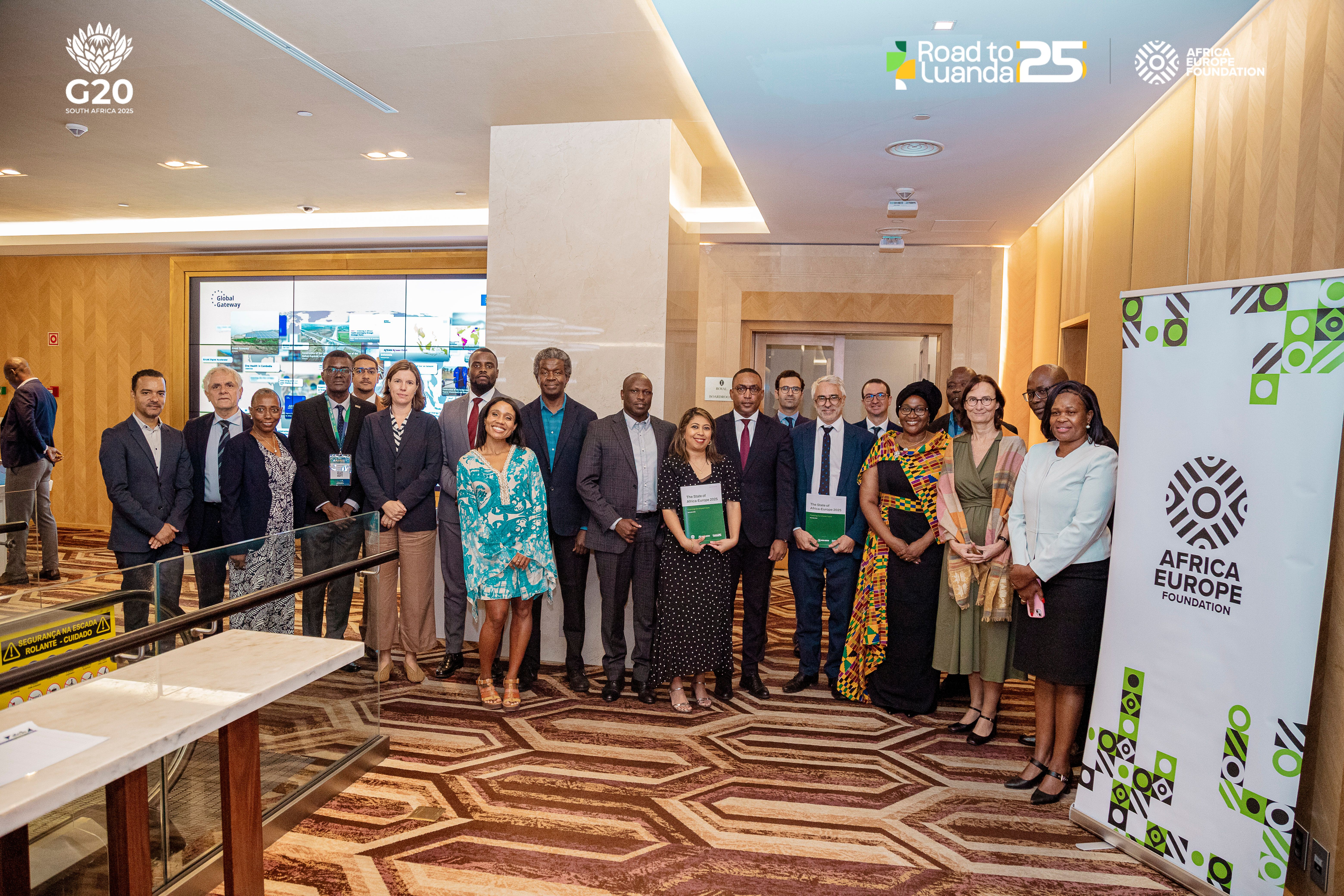
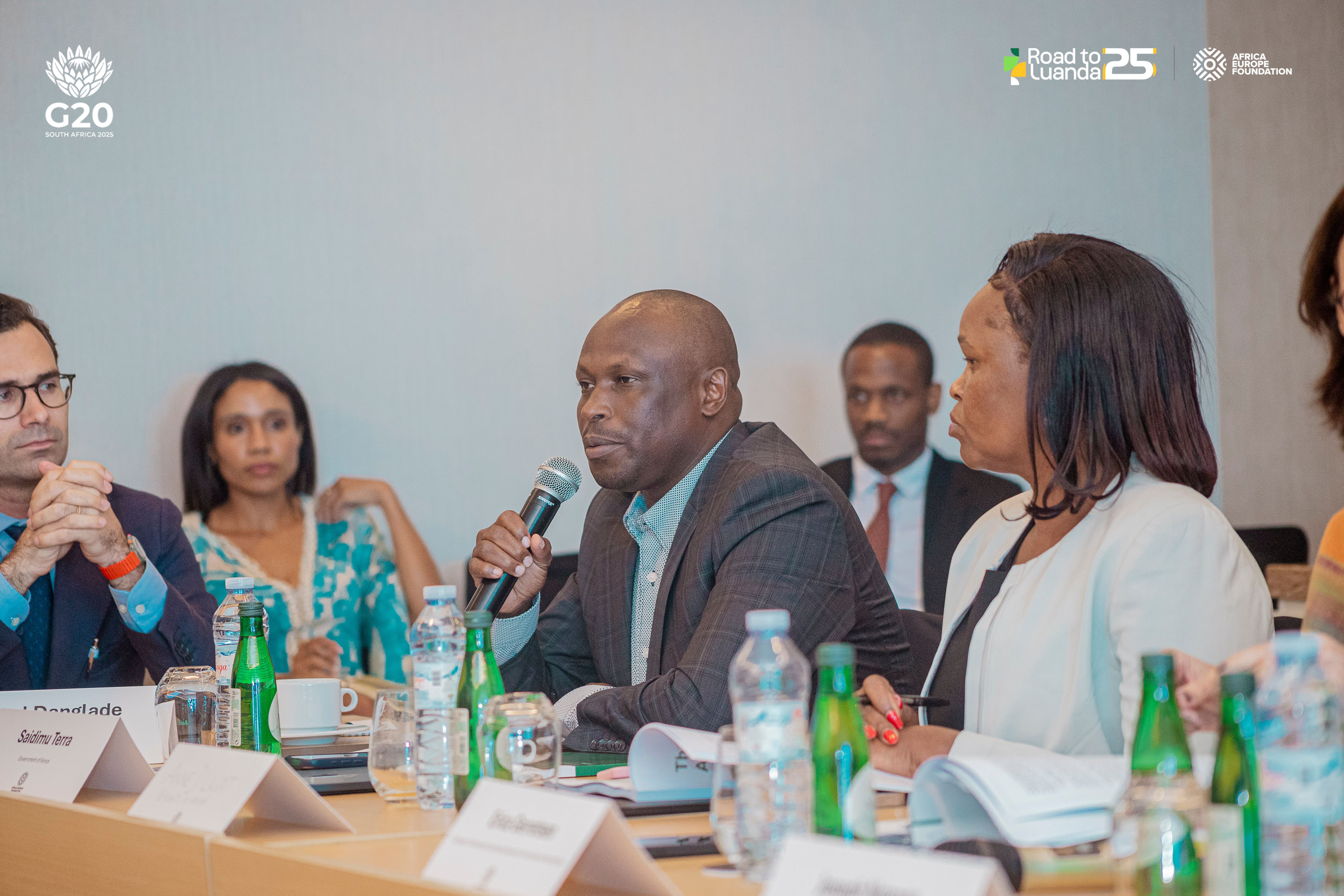
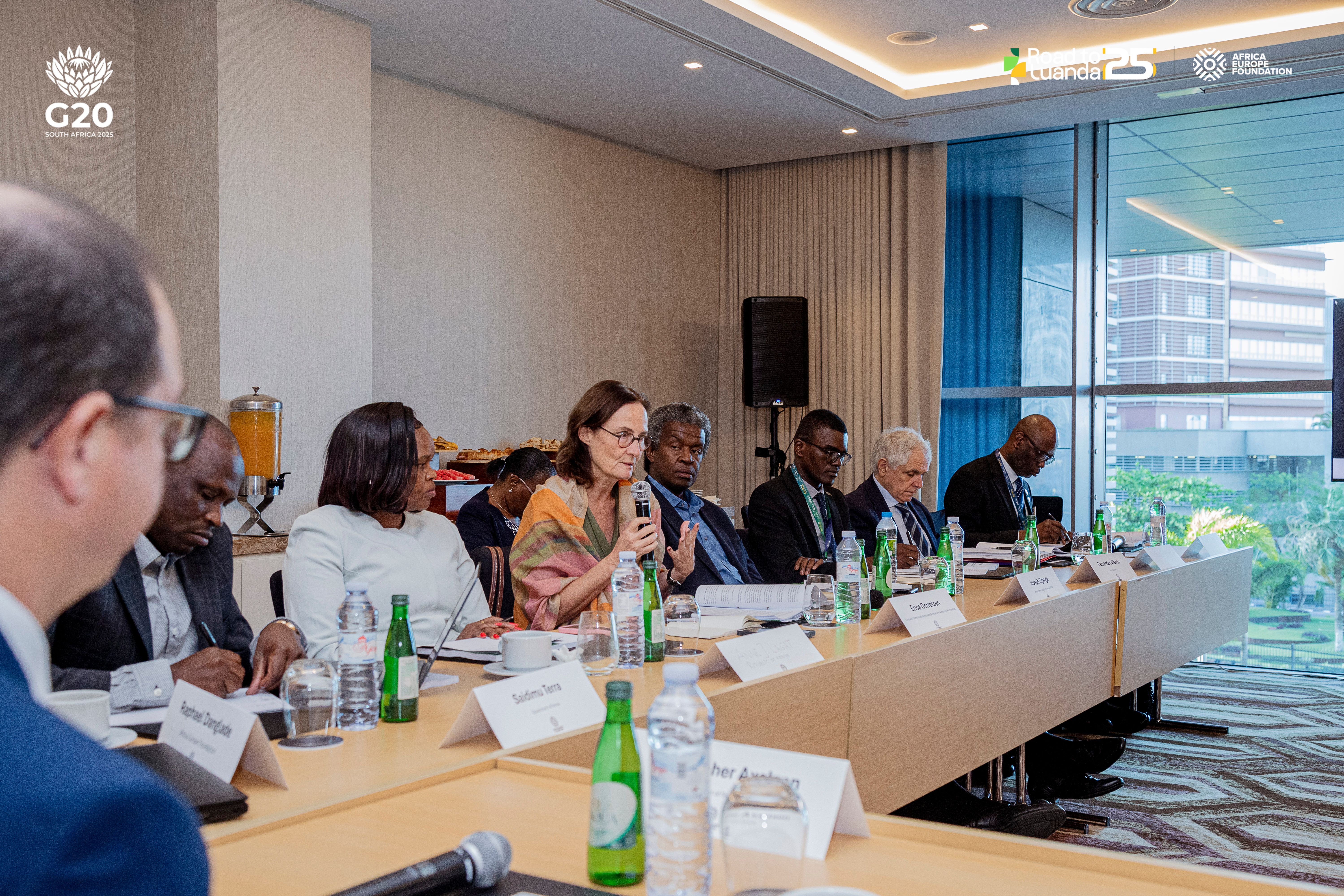
Africa-Europe High-Level G20 Tax Symposium
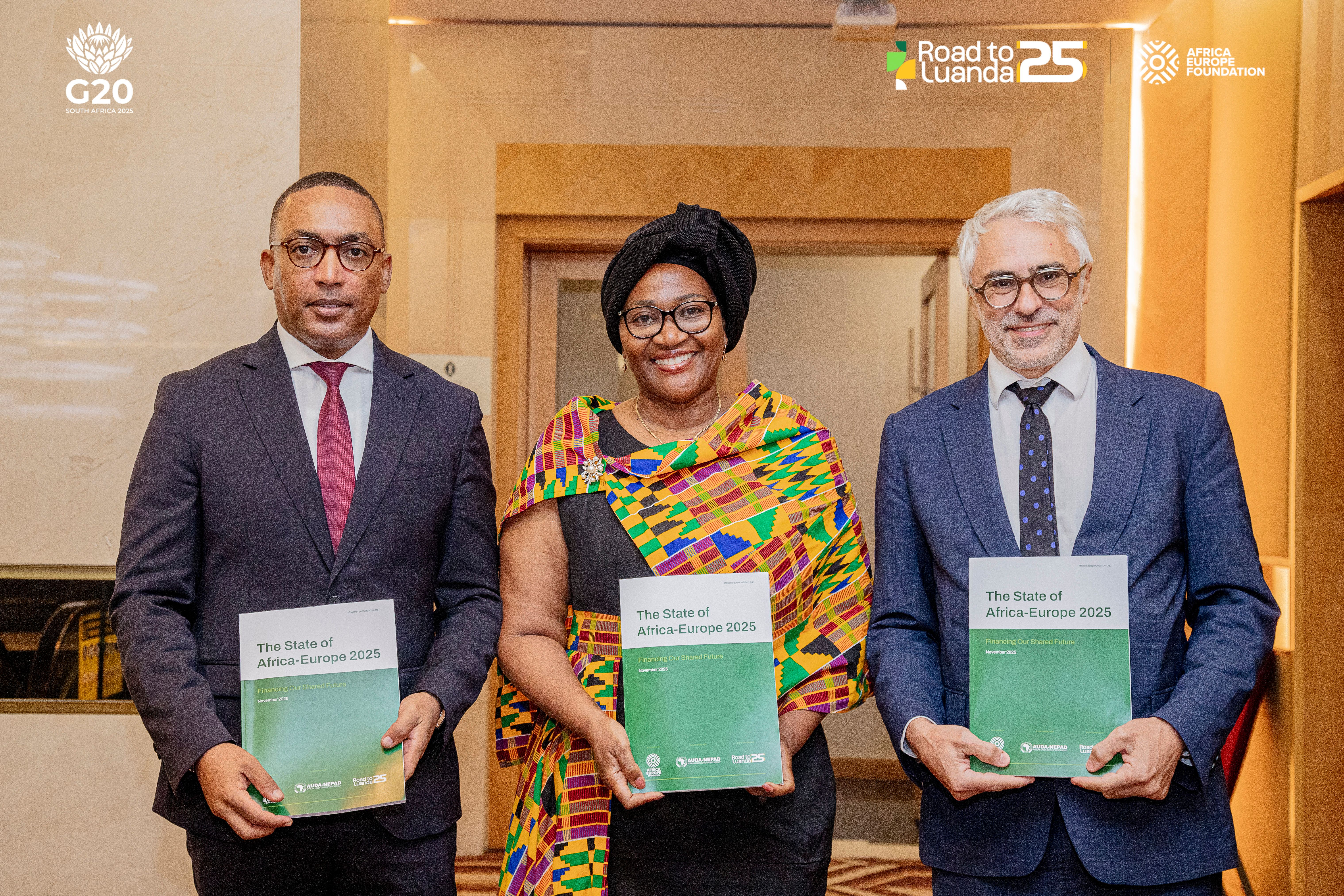
The G20 Tax Symposium marked the start of AEF in Angola for the AU-EU Summit 2025. Straight on the back of the G20 Leaders’ Meeting in South Africa, the Tax Symposium was framed by AEF’s recently launched State of Africa-Europe Report 2025 with a thematic focus on Finance. Organised in partnership with the G20 Presidency, the session brought together African and European policymakers to move rhetoric into action.
-
Valuing the G20 stock-take: Participants welcomed the South African G20Presidency’s stock-taking of international tax and transparency initiatives (BEPS, information exchange, two‑pillar work), noting OECD evidence that information exchange has materially increased revenues and compliance since 2009.
-
Scaling DMR remains key: Consensus that Domestic Resource Mobilisation (DRM) must be scaled via improved tax administration (digitalization, data integration, VAT & customs reforms) rather than by across-the-board rate increases; emphasis on tailored, country-specific administrative reforms and political buy-in. Proposal to create a regular Africa-Europe Tax & DRM dialogue platform to operationalise stock-take findings, share best practices, and track implementation.
-
Enhanced focus on Illicit Financial Flows (IFFs): A strong call for enhanced cooperation to expand cross-border transparency (beneficial ownership registries, automatic exchange of country‑by‑country and immovable property data) and to bring African jurisdictions into trust frameworks while addressing confidentiality and capacity gaps. Proposal to support targeted use of returned assets and recovered IFFs for investable infrastructure pipelines—agree rules to ring-fence a share for climate‑resilient, growth‑enhancing projects and private-sector leverage.
-
The Climate–Tax intersection: Carbon taxation, CBAM, and climate finance were raised as both an opportunity and a challenge — participants urged mechanisms that protect developing countries (common but differentiated responsibilities), retain more value in-country (e.g., use CBAM proceeds for local decarbonization), and explore debt-for-climate conversions and asset‑conversion approaches. Proposal to coordinate on climate‑tax measures (co-design technical assistance for carbon pricing, CBAM impacts and revenue uses; explore debt‑for‑climate conversions and partial debt retention-for-investment pilots).
-
Catalysing Capital Flows. Participants identified various ways to catalyse investment at the needed scale and speed. From the informal economy (eg. simplified compliance pathways for micro/formalizing businesses, tax literacy campaigns …) and domestic institutional capital pension/insurance funds, sovereign wealth funds, DFIs, blended finance). Proposal to launch a joint capacity programme (Team Europe + African partners) focused on: digital tax administration and customs interoperability; beneficiary ownership and property-data exchange pilots; and tax litigation and asset recovery support.
The new State of Africa-Europe Report 2025 was referenced extensively in Luanda, with emphasis on the pragmatic areas of action on financing (DRM, combatting IFFs, the digitalisation of tax systems…); participants also referenced the importance of the Report’s “reality check” on the new for a new financing model and how the Report can support the follow-up to the G20 Stock-take and AU-EU Summit commitments.
Beyond Luanda & the AU-EU Summit
The Joint Declaration / Leaders’ Declaration of the 7th AU-EU Summit strengthened the approach advocated by AEF through its #RoadToLuanda25 Initiative and the State of Africa-Europe Report 2025 (‘Financing Our Shared Future’): moving decisively beyond aid and charity towards co-creation, risk-sharing, value building, trading resources, and catalysing investment at the speed and scale required. Several Summit conclusions capture this approach, providing political impetus to focus on “scaling investment”; “improving bankability and value chain development”; and “mobilising private finance to accelerate transformation across sectors”
Areas of Focus for the Follow-up
The Joint Declaration of the 7th AU-EU Summit provides political impetus to focus from 2026+ on strategic domains of cooperation outlined in the State of Africa-Europe Report 2025, notably Sustainable Finance and Green Industrial Partnerships, while the Declaration represents a milestone for mainstreaming strategic topics advocated by AEF (from Ocean/Blue Economy and Investment in Clean Cooking Solutions to Culture Cooperation and Combatting Illicit Financial Flows).
There are also direct referencing to the areas of action and language of the State of Africa-Europe Report, such the commitment “to support the development of a strong legal and institutional framework for corridor development, inspired by the Trans-European Transport Network, fully tailored to the specific opportunities and dynamism of Africa’s transport sector”.
.
Follow-up Mechanisms for the AU-EU Partnership
The AU-EU Summit Declaration also represents a further milestone for embedding ‘follow-up mechanisms’ for the Partnership (Summits, Ministerial Meetings..), a key pillar of AEF’s ongoing advocacy and Founding Charter.
Countries agreed to “continue to work jointly on an implementation plan on the Sectoral Areas of Cooperation” set to be adopted in May 2026, six months following the Luanda convening, in an AU-EU Senior Officials Meeting. They further committed to following up on “engagement and monitoring the effective implementation of the commitments undertaken during AU-EU Summits through the regular update of the Joint Monitoring Report”.
As outlined in the State of Africa-Europe Report 2025, this is now about the How, not the What. We must strengthen complementary mechanisms for follow-up and a sustained Africa-Europe engagement between Summits, leveraging collaboration between think tanks, civil society, research institutions and the private sector.